July 23rd, 2021
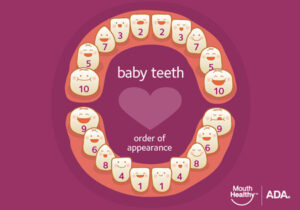
Baby teeth growing in! This is a big topic amongst parents of our youngest patients. "When should I expect the teeth to come in?" and "My other kid got their teeth by this time already but she's not growing any yet" are just some common things that we hear from parents!
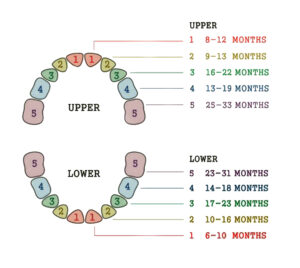
The chart above shows you when we expect the different baby teeth to grow in. Usually by 3 years of age, your child should have all 20 baby teeth. BUT! The most important thing to remember is that every child is different! Not everyone gets their baby teeth in at the same time.
When pediatric dentists check your child's mouth, we are not going through a checklist to see if the teeth that are supposed to be there have come in. We are looking at the order that the different type of teeth come in, and we are feeling your child's gums to see if we can feel under the gums the baby teeth that haven't come yet.
If teeth grow in out of order, this may point to certain reasons such as: your child may be missing the tooth that hasn't come in yet, there may be something in the gums/bone that is preventing the tooth to come in, or your child's tooth is just taking its time to come in! Even if teeth grow in out of order, it isn't an immediate reason to worry!
Your dentists are always there to help answer any questions you may have and to help your child develop their beautiful smile!
May 14th, 2021
Is your child in the stage where they are starting to drool a lot, they have the urge to bite everything, and you are starting to see little teeth come in? It's an exciting time! - your child is teething! We know teething can be extremely difficult and uncomfortable for some children, and it becomes a difficult time for the parents as well. Because we know how hard it is, here are some tips to help you and your family get through the teething process:
- Frozen towels - Wet a soft towel and place it into your freezer until the towel is cold but NOT frozen or hard. This is the safest and best option to have your child chew on! The towel is soft so that there is no harm to your child's mouth and the cold will help relieve their discomfort!
- Soft teething toys - Any teething toy that is soft in nature is great, such as the toys that you can throw into the freezer. Any toy works as long as it is soft. You want to avoid any hard plastic toys because they can easily break off and create a choking hazard for your child.
- Avoid teething medications - You want to avoid giving your child medications that are specifically for teething. The medications made for teething may not be at a healthy and safe level for your child. Avoid especially any topical ointments with anesthetic since it may not be safe for your child, such as Orajel. If needed, you can give your child Children's Tylenol to help with any fevers that come with teething.
Your dental family is always here to support you with any questions you may need! If you have any questions, please don't hesitate to ask!